ShopDreamUp AI ArtDreamUp

Deviation Actions


Royal Steam Fund
Support my continuous work by contributing to my tip jar. This tier won't include any specific perks, but you will receive my appreciation and a more regular upload schedule. Furthermore, your contribution will help me pay off a loan I had to take on for special medical treatment.
$5/month


Suggested Deviants


Suggested Collections


You Might Like…


Featured in Groups

Description
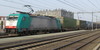
Like everybody, I love steam locomotives, but I also love good stories, and in terms of that, the 199.8 beats just about everything else on the HSB meter-gauge network.
Back in the GDR, trucks were expensive and the narrow-gauge railroad lines in the Harz were still very important for freight traffic. Efficiency was highly important in the rather poor GDR, and the "new" steam locomotives, class 99.23-24 (such as 99 7240-7 here), were no longer cutting it. It was decided to buy new diesel locomotives.
The GDR had already successfully built diesel locomotives with hydraulic transmission of all sizes, including ones for narrow-gauge (for export), but eventually Comecon rules forbade that. The options would have been diesel-electric locomotives from the soviet union, which would have been too heavy, or diesel-hydraulics from Romania. Such locomotives, the class 119, nickname 'Submarine', were already operating on normal-gauge lines, and their service record was horrible. They ended up with one of the weirdest constructions you’ll find: A number GDR-built class V100 (by then called class 110) B’B’ locomotives were fitted with new narrow-gauge C’C’ trucks and modified for narrow-gauge use. Significantly larger than anything else on the system, the new class 199.8 soon gained the name Harz-Camel. And that is why socialism failed.
Today, HSB tries to keep them as far away from passenger trains as possible, as rail fans just hate them. A few of them are in storage, others were sold and now run on normal gauge again, but a small number (now fitted with new engines and other modifications, but still the classic paint scheme) is still needed for work trains and the little freight service that remains. Here, 199 861-6 is resting in Wernigerode.
BTW: I’ve noticed and keep noticing your favs, and I appreciate them, but I’ll collectively say thanks at the end of this series so I don’t spam you as much if you decide that more than one of those pictures is nice.
Back in the GDR, trucks were expensive and the narrow-gauge railroad lines in the Harz were still very important for freight traffic. Efficiency was highly important in the rather poor GDR, and the "new" steam locomotives, class 99.23-24 (such as 99 7240-7 here), were no longer cutting it. It was decided to buy new diesel locomotives.
The GDR had already successfully built diesel locomotives with hydraulic transmission of all sizes, including ones for narrow-gauge (for export), but eventually Comecon rules forbade that. The options would have been diesel-electric locomotives from the soviet union, which would have been too heavy, or diesel-hydraulics from Romania. Such locomotives, the class 119, nickname 'Submarine', were already operating on normal-gauge lines, and their service record was horrible. They ended up with one of the weirdest constructions you’ll find: A number GDR-built class V100 (by then called class 110) B’B’ locomotives were fitted with new narrow-gauge C’C’ trucks and modified for narrow-gauge use. Significantly larger than anything else on the system, the new class 199.8 soon gained the name Harz-Camel. And that is why socialism failed.
Today, HSB tries to keep them as far away from passenger trains as possible, as rail fans just hate them. A few of them are in storage, others were sold and now run on normal gauge again, but a small number (now fitted with new engines and other modifications, but still the classic paint scheme) is still needed for work trains and the little freight service that remains. Here, 199 861-6 is resting in Wernigerode.
BTW: I’ve noticed and keep noticing your favs, and I appreciate them, but I’ll collectively say thanks at the end of this series so I don’t spam you as much if you decide that more than one of those pictures is nice.
Image size
2970x1980px 4.5 MB
Make
Canon
Model
Canon EOS 1000D
Shutter Speed
1/200 second
Aperture
F/9.0
Focal Length
18 mm
ISO Speed
200
Date Taken
Apr 2, 2010, 12:42:01 PM
Comments126
Join the community to add your comment. Already a deviant? Log In
Die haben doch Tunnels auf der Strecke. Ich wundere mich immer noch, dass diese hochbeinigen Dieselloks durchpassen!